
Questions to ask
Questions that get a story going, for a parent, a grandparent or yourself.
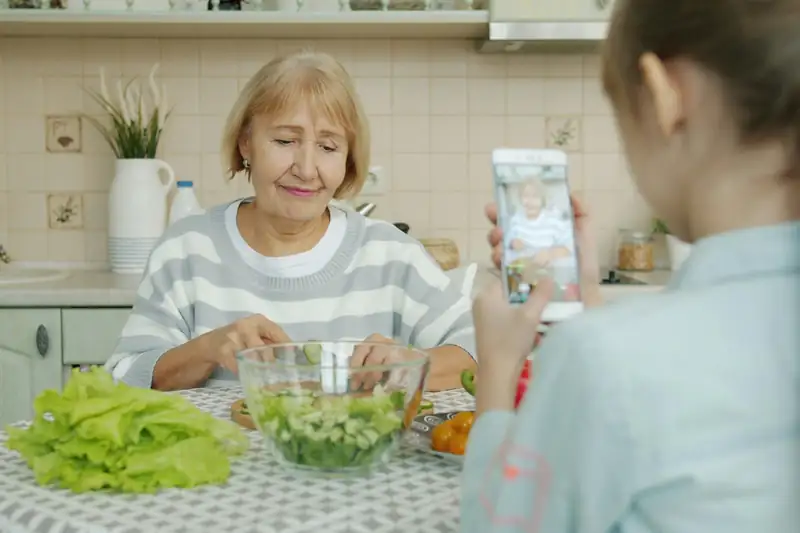
Pick a question
Where you began
What is the very first thing you remember?
There are more guides to remembering and keeping your stories.
All 40 questions by chapter
From lovedeverafter.com/questions/ · free to print and share unchanged.
1. Where you began
- What is the very first thing you remember?
- Tell me about the house you grew up in. What did it smell like?
- What were your parents like when you were small? What did they do all day?
- What do you remember about your own grandparents, and where our family came from?
- What got you into trouble as a child?
2. Growing up
- Who was your best friend at fourteen, and what did you two get up to?
- Which teacher or grown-up saw something in you?
- What did you want to be, and what happened to that dream?
- What music or films felt like yours when you were young?
- What was your first job, and what did you do with your first pay?
3. Love and family
- How did you two meet? Tell it the way you always tell it.
- When did you know?
- What was the day you married, or made it official, really like?
- What do you remember about becoming a parent, and then a grandparent?
- What did you hope our family would be like?
4. Work and making a life
- What work are you proudest of, and why?
- Tell me about a time money was tight. How did you manage?
- Who gave you a chance when you needed one?
- What was the biggest decision you ever made?
- Of all the places you’ve lived, which felt most like home?
5. Turning points
- What was the hardest time you lived through, and what got you through it?
- What is something you changed your mind about?
- Is there a day you would gladly live again?
- Which big events in the world do you remember, and where were you when you heard?
- Who do you still think about? Tell me about them.
6. Who you are
- When did you feel most alive?
- What makes you laugh, every time?
- What do people get wrong about you?
- What are you quietly proud of that nobody gave you credit for?
- What do you believe in, and has that changed?
7. The small things
- What is a recipe you make from memory? Talk me through it.
- What sayings did your parents use that you still hear yourself say?
- Which family story always gets told at gatherings? Tell me your version.
- Which object in this house has a story?
- What traditions did you start, and why?
8. For the people who come after
- What do you want your grandchildren to know about you?
- What have you learned about life that you would want to pass on?
- What would you tell me on a hard day?
- What are your hopes for the people you love?
- Is there something you’ve never been asked that you would like to tell?
How to use them
Common questions
How many questions should I ask in one visit?
Five is plenty for one visit. Choose a single part of life and let one good answer lead to the next. Often the most useful thing you can ask is simply “What happened next?”
What are good questions to ask grandparents about their childhood?
Start with places and people. Ask about the house they grew up in and what it smelled like, the first thing they remember, or what got them into trouble as a child. The first two chapters on this page are an easy place to begin.
Can I use these questions to tell my own story?
Yes. Choose “Myself” at the top of the page and the questions change to speak to you. Many people find it easiest to answer one aloud, as if someone they love were sitting across the table.
Should I record the conversation?
If they’re happy for you to, yes. Ask first, and let them skip anything they’d rather leave alone. A recording keeps the way they say things, which a written note can’t hold.
Where these questions come from
In 1963 the psychiatrist Robert Butler described looking back on one’s life as a natural, healthy part of growing older. He called it life review. We drew on four structured ways to guide it: Haight’s Life Review and Experiencing Form, Birren’s guided autobiography, McAdams’ Life Story Interview and Chochinov’s dignity therapy. The wording of every question is our own. If a conversation stirs up sadness that stays with you, a GP or counsellor is a good person to talk to.
- Butler RN (1963). The life review: an interpretation of reminiscence in the aged. Psychiatry 26(1):65–76.
- Haight BK & Haight BS (2007). The Handbook of Structured Life Review. Health Professions Press.
- Birren JE & Deutchman DE (1991). Guiding Autobiography Groups for Older Adults. Johns Hopkins University Press.
- McAdams DP (2008). The Life Story Interview. Foley Center, Northwestern University.
- Chochinov HM et al. (2005). Dignity therapy. Journal of Clinical Oncology 23(24):5520–5525.
Shared under Creative Commons BY-NC-ND 4.0. You’re welcome to print, copy and share them unchanged.
Keep what comes back
Once the stories start, you might like to keep them somewhere safe. Our guides can help with gathering a loved one’s stories, recording them, and planning ahead together.