How to ask a parent or grandparent about their life, record it gently, and keep it, including when memory is fading.
Last reviewed · For readers in Australia
In short
Ask about moments, not whole summaries.
Keep visits short and stop while they’re still enjoying it.
Copy recordings to more than one place.
Many of us realise, sometimes suddenly, that there are things we’ve never asked our parents. How they met. What their own parents were like. The year everything changed. When we’re young it seems there’ll always be time, and then one day it feels urgent to listen.
This guide is for you, the son, daughter or grandchild who’d like to gather those stories. It’s about asking well, recording simply and keeping what you hear.
Start with an invitation
Some parents love talking about the past. Others feel shy, or wonder why anyone would be interested. A gentle invitation helps: “I realised I don’t know much about your childhood, and I’d love to hear about it.” Or, “The kids keep asking about the farm. Would you tell me about it so I can tell them properly?”
Let them know they can say no to any question, and that you’re asking because you care, not because something’s wrong.
Ask about moments, not summaries
“Tell me about your childhood” can be too big to answer. Questions about a particular moment work better: “What did you have for breakfast as a girl?” “Who was your best friend at school, and what did you get up to?” “What was your first pay packet spent on?”
Our free questions to ask are written for exactly this. You can choose the version for a parent or a grandparent, shuffle them, share one by text, or print the lot. Try one or two per visit, rather than a list.
When an answer comes, follow it. “What happened next?” and “How did that feel?” are often the best questions of all.
Bringing the grandchildren in
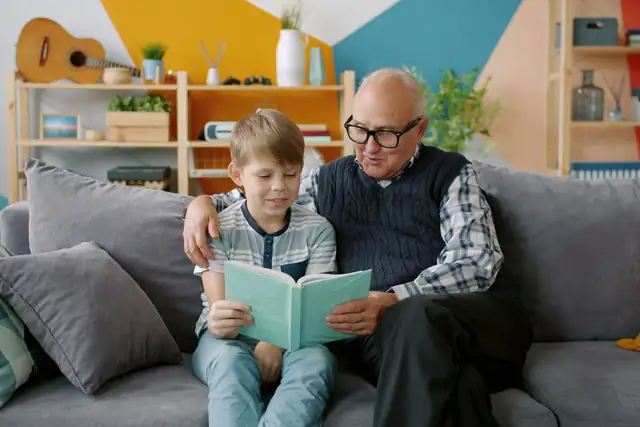
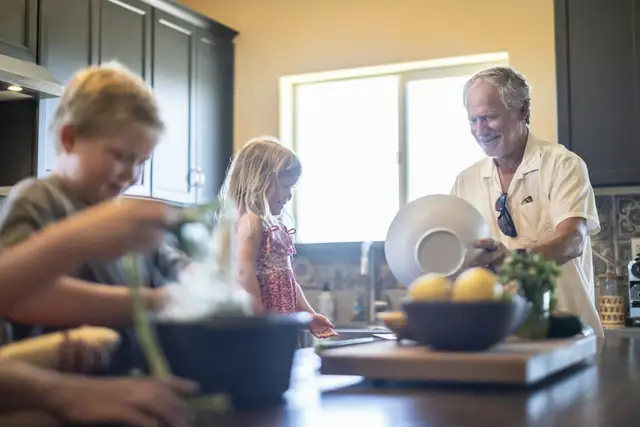
Children often ask the questions adults are too polite to ask, and grandparents often love answering them. A grandchild might interview Grandpa for a school project, or simply ask what toys he had and what he got in trouble for. You might help them choose a few questions beforehand, and sit in to keep the recording going. The recording becomes a gift to both of them.
Recording, simply
You don’t need special equipment. A phone’s voice memo app works well if you:
put the phone on the table between you, on something soft to reduce rattle
choose a quiet room, away from the television and the kettle
do a short test and play it back before you start
keep each recording to one topic, and name the file afterwards
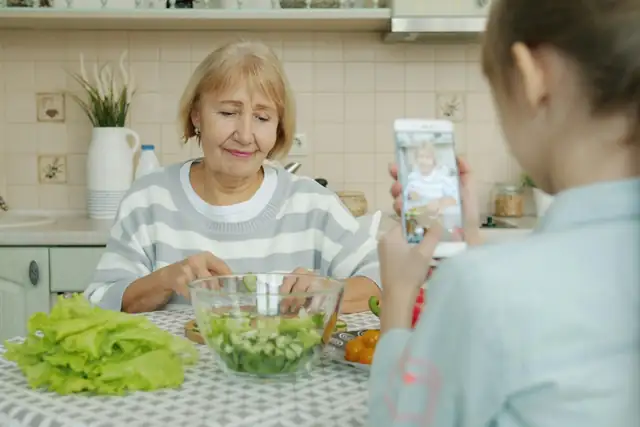
Always ask before you record, and tell them who might hear it. Some people relax once they forget the phone is there. If the recording makes them self-conscious, just listen, and write notes afterwards.
Pacing and care
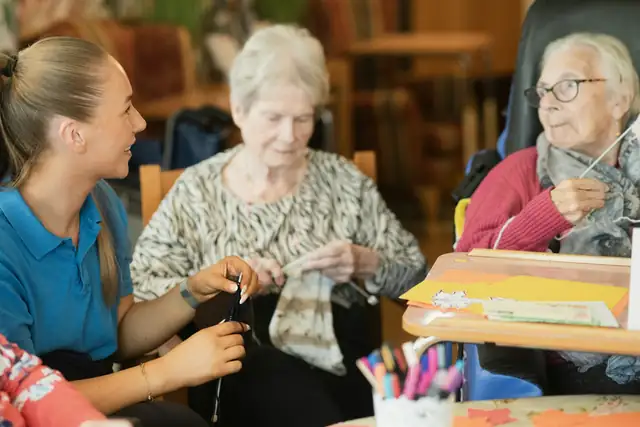
Keep visits short, perhaps half an hour, and stop while they’re still enjoying it. Older people tire, and memories can bring up strong feelings. If a question touches something painful, you can say, “We don’t have to talk about that,” and move on. It’s their story, so let them choose what to tell.
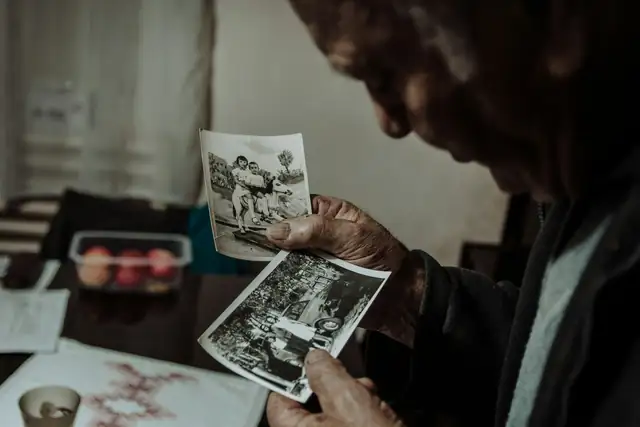
Photos, objects and music are wonderful prompts. A wedding photo, a medal, a recipe card or a song from their youth can open a door that questions can’t. Our post about the kitchen you grew up in shows how a single room can bring a childhood back.
If memory is fading
Reminiscing can still bring a great deal of joy when someone is living with dementia. Dementia Australia suggests short, calm sentences, one idea at a time, and a quiet setting. It advises against testing memory or correcting facts, and suggests responding to the feeling behind what’s said. If talking about the past brings distress, its help sheet suggests stopping and changing to another activity.
A simple memory book of photos with short captions can be a lovely shared project. Dementia Australia’s free National Dementia Helpline, on 1800 100 500, can offer advice on communication and on ways to share memories.
If time is short
If your parent is very unwell, short and simple is best. A few minutes of their voice telling one favourite story, or saying something to the grandchildren, can mean the world later. Our guide to caring for someone near the end of life has more on making the most of the time.
Keeping the stories safe
Copy recordings to at least one other place, such as a computer or a shared family folder, so they aren’t lost with a phone. Label photos with names, places and years. The National Archives of Australia has practical advice on storing photos and papers so they last, including keeping them somewhere cool, dry and dark.
Share them, too. A recording played at a birthday or sent to a cousin often prompts more questions, and more stories.
And your own
While you’re gathering theirs, you might find yourself remembering your own. Our guide to telling your life story is there for when you’re ready.
Further help
Our questions to ask Forty questions for a parent or grandparent, with share and print options.
Carer Gateway Support for you if you’re also caring for your parent, on 1800 422 737.
Sources we checked (5)
Each fact in this guide was checked against these official pages on 23 October 2026. Rules and forms change, so please check the source for your own situation.
This is general information, not legal, financial, insurance or medical advice. For your own situation, please speak with a qualified professional or the official body named above.