A printable one-page index of your family’s photos, letters, recordings and keepsakes, with what each holds, who knows about it and where it is kept.
Last reviewed
In short
Give each box, album, folder or file one line: what it is, who and what it shows, when, who told you and where it lives.
Write dates as year, then month, then day, so they sort in order and read the same in every country.
Keep a copy of the list with your important papers, give one to a relative and update it once a year.
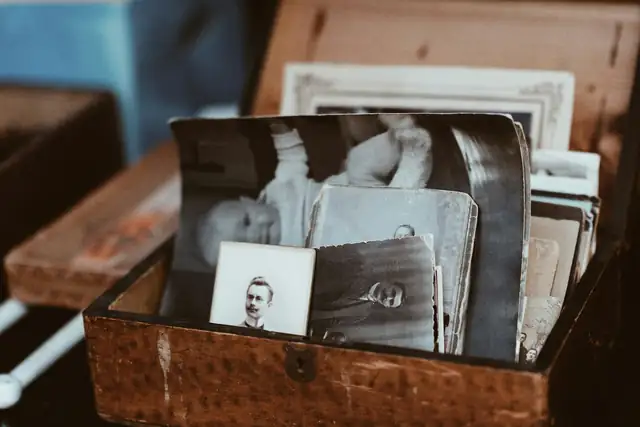
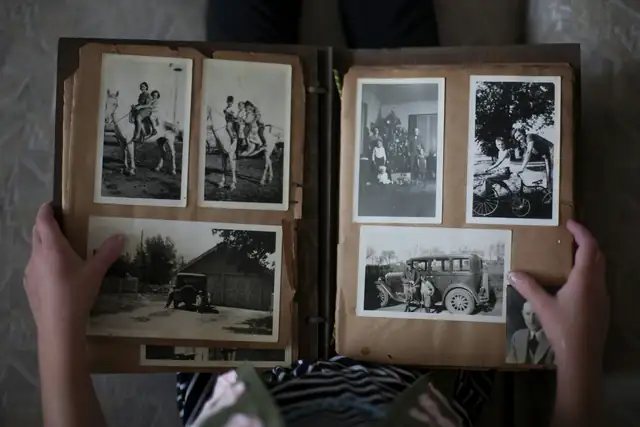
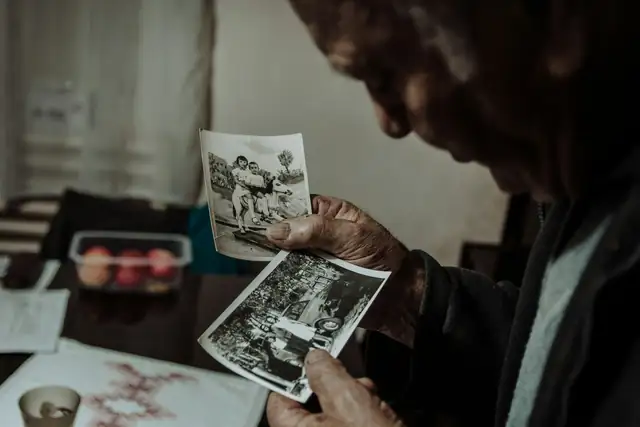
A family’s memories are usually spread out. An album in the lounge room, a shoebox in the wardrobe, letters in a relative’s spare room and thousands of photos on a phone. When nobody knows what’s where, precious things get lost, or thrown out by mistake.
A family memory index fixes that with one page. Each box, album, folder or file gets a single line that says what it holds and where it lives. You can print the sheet at the end of this guide and fill it in by hand.
Why one list helps
The people who look after national collections start with exactly this kind of list. The Society of American Archivists describes it as a road map to a collection: it tells someone who has never seen the boxes what’s there and how to find it.
At home, that someone might be your children, or you in ten years. The Library of Congress suggests keeping a copy of the list of your photos with your important papers, so it can be found when it’s needed.
What goes on each line
Libraries describe every item with the same short set of details, such as its title, who made it, its date and its subject. The Dublin Core standard is built this way. Using the same few details for every line makes your list easy to read and easy to add to.
For each box, album, folder or file, write:
A number. Write the same number on the box or album in soft pencil, or on a label.
What it is, such as a green shoebox of prints, a wedding album or a folder of letters.
Who and what it shows, and where. “Mum’s family at the farm” is plenty.
When. Write the year first, then the month, like 1962-06. If you only know the decade, write 1950s.
Who told you, and roughly when you asked.
Where it lives: the room and shelf, or for digital files, the device or account and the folder name.
Dates that sort themselves
Dates like 02/04/03 mean different things in different countries. The W3C says the international format of year, month and day, written 2003-04-02, is the best choice when people in different countries will read it. Dates written this way line up in the right order on a list or in a computer folder, and a relative overseas will read them the same way you do.
Note who told you
Careful family historians cite a source for every fact, a habit set out in the Board for Certification of Genealogists standards. On your index, the name of the person who told you and the month you asked is enough, like “Auntie Jean, 2026-10”. If two people remember something differently, write both down.
One line per box
You don’t need to list every photo. A professional list can simply say what each box holds, and even which shelf it sits on. The Society of American Archivists calls this a container list. Start with one line for each box or album. You can add more detail later for the things that matter most.
Include the digital ones
Photos and recordings on phones, computers, memory cards and online accounts belong on the list too. The Library of Congress suggests finding all of them, including the ones you’ve shared online.
For files, write the folder name. The US National Archives suggests file names without spaces, using hyphens or underscores instead, and adding who, what, where and when to each file. Keep passwords off this page, since copies of it will be shared.
Keep it safe and shared
Keep one copy with your important papers.
Give a copy to a relative who lives somewhere else.
Update it once a year. A good day is when you check that your digital copies still open, which the Library of Congress suggests doing yearly.
Tell your family the list exists, and where to find it.
Your fill-in sheet
The first line is an example. Print as many pages as you need.
No.
What it is
Who, what and where
When
Who told you
Where it lives
1
Green shoebox of prints
Mum’s family at the farm
1950s
Auntie Jean, 2026-10
Hall cupboard, top shelf
2
3
4
5
6
7
8
9
10
Where to begin
Choose the box nearest to you. Give it the number 1 and write its line. If it’s full of old prints, our guide to organising and storing old family photos shows how to sort and label them, and the family memory method shows how the index fits with the other habits that keep family memories safe.