How to decide which family papers, photos and keepsakes to keep, what’s usually safe to let go, and how to keep the most precious few ready to grab.
Last reviewed
In short
Choose by the story a thing tells and who it connects to. What it would sell for is a separate question.
Keep bundles together the way you found them, with a short note of whose they were and where they came from.
Keep the few things you could never replace in one box you could pick up and carry out quickly.
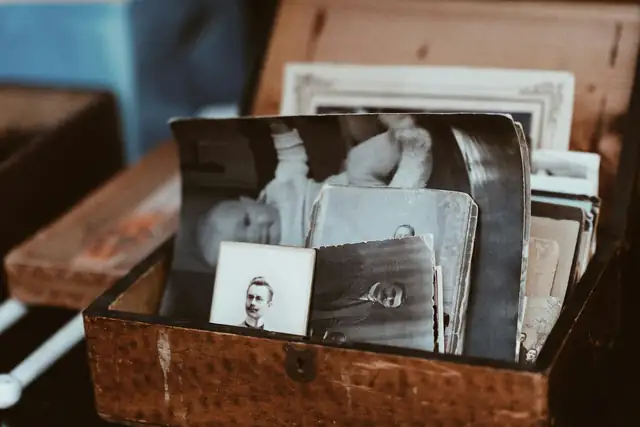
Sooner or later most families open a cupboard or a spare room full of the past. Shoeboxes of photos, letters tied with string, a father’s medals, a mother’s recipe cards and boxes nobody has opened in years. Keeping all of it is rarely possible, and choosing can feel hard.
The people who look after public collections make these choices every day, and they have a practical way to decide. You can use it at your kitchen table.
Spread it all out
Before you decide anything, see what you have. Margot Note, who wrote the Society of American Archivists’ book on family archives, suggests gathering everything together on a big surface such as the dining table, so you can see the whole of it before you make choices.
As you look, notice the natural groups: a grandmother’s scrapbooks, or the letters your parents wrote to each other. She points out that groups like these tell you more than single items do, because each piece makes more sense beside the others.
If there’s a lot, the printable family memory index gives you one line per box, so you can keep track as you go.
Choose by the story
For each group or item, ask what it tells you and who it connects to. A letter that shows how your grandparents met may mean more to your family than a valuable ornament nobody remembers buying.
Public collections decide in the same spirit. The Society of American Archivists describes this choice as judging the significance of records, and treats their money value as a separate matter.
These questions help, and they’re drawn from Margot Note’s list:
Does it matter to you or your family?
Is it one of a kind, or could it be found again?
Does it hold real information? A letter usually says far more than a receipt.
Is it readable, and in a condition that will last?
If there are several, which is the most complete?
For photos, the Library of Congress suggests picking the ones you feel are especially important, and says you can pick a few or many. Where you have several versions of the same photo, it suggests keeping the one with the highest quality.
Keep bundles as you found them
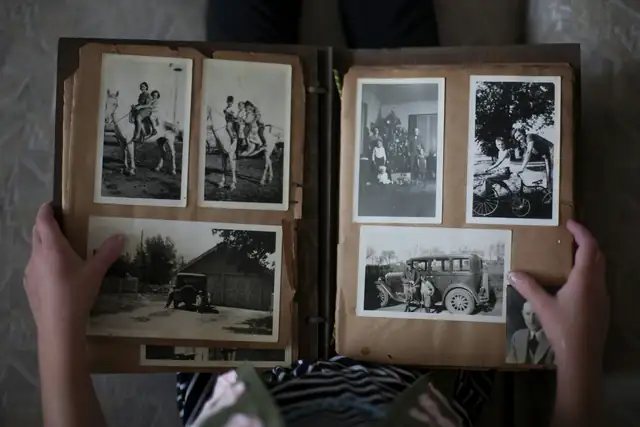
When you open a box, try not to tidy it straight away. A bundle of letters tied with ribbon, or an album in the order someone filled it, tells you something about the person who kept it.
The Society of American Archivists has a name for the order the original owner kept things in, and the writers it quotes keep collections in that order wherever it makes sense. Its dictionary also explains that things from one person or family are kept apart from things that came from someone else, so their meaning isn’t lost.
At home, that means keeping your aunt’s letters together in their bundle and in their order, in a separate folder from your father’s letters, even if they cover the same years.
Note whose it was
A photo with no story attached is easy to throw away later. A short note keeps the story with the thing.
For each bundle or keepsake, write a few words on a slip of paper or a tag: whose it was and where it came from, such as the cupboard it was found in or the person who passed it on. “Dad’s letters from his army years, found in the hall cupboard, 2026-10” is plenty. Use soft pencil near anything old, and keep the note with the item.
The Society of American Archivists treats a record of where something came from and who has owned it as a basic principle of its work. Its brochure on donating family records says the names of the people in photos and the stories behind special items are helpful to pass on with them.
What’s usually safe to let go
Margot Note suggests that some things can usually go once you’ve looked through them:
Blurry, badly framed or unremarkable photos.
Brochures, flyers and stray newspaper or magazine clippings.
Old calendars, once you’ve noted any birthdays and anniversaries written on them.
Newsletters, after you’ve cut out any family news.
Where you have copies of the same photo, keep the best one, as the Library of Congress suggests, and the rest can go to relatives or be let go.
Ask before letting go
Before anything special leaves the family, ask the others. Someone may know the story behind it, or want it. Margot Note suggests offering things you don’t want to relatives, and dividing a sentimental collection among them so the memories are shared. She also suggests keeping a collection together when it has historical or artistic value, because splitting it up can lose some of that value.
Some papers may matter beyond your family, such as wartime letters or the records of a local club. The Society of American Archivists’ brochure for families asks you to contact an archive’s staff before sorting out or throwing away such papers, because removing or rearranging items can reduce their value for research. It suggests starting with your local or state historical society or archives.
Before an object goes, take a clear photo of it, and of any writing on it. The State Archives of North Carolina notes that making images of precious documents and photos at least keeps copies of the originals.
When you’re not sure
It’s all right to wait. Margot Note suggests coming back to things later if you can’t decide, and keeping sensitive heirlooms stored away until you’re ready. A labelled “not sure yet” box keeps the choice open without letting it take over the room.
A grab first box
Choose the few things you could never replace, and keep them together in one box or folder you could carry out quickly.
The State Archives of North Carolina suggests deciding before an emergency which of your records are historically important to your family, and keeping a “grab and go” folder or box somewhere you can reach quickly. It lists family documents, Bibles, letters, photographs and scrapbooks among the things that are often irreplaceable.
You may not be able to take everything if you have to leave home quickly, so the same page suggests making copies of some precious documents and photos. Three copies, two places shows how to keep those copies safe, and the guide to organising and storing old family photos covers boxes, labels and the best place in the house for everything else you keep.
Your sorting sheet
Print this page and fill in one line for each bundle or keepsake. The first line is an example.
What it is
Whose it was and where it came from
Keep, ask family, offer or let go
Grab first?
Letters tied with ribbon
Nan’s, from her wardrobe
Keep together
Yes
Where this fits
Choosing what to keep is the first part of the Keep step in the family memory method. Once you’ve chosen, the rest of the method helps you look after what you’ve kept and share it with the people who’ll want it next.